The character chronicle
Baruch
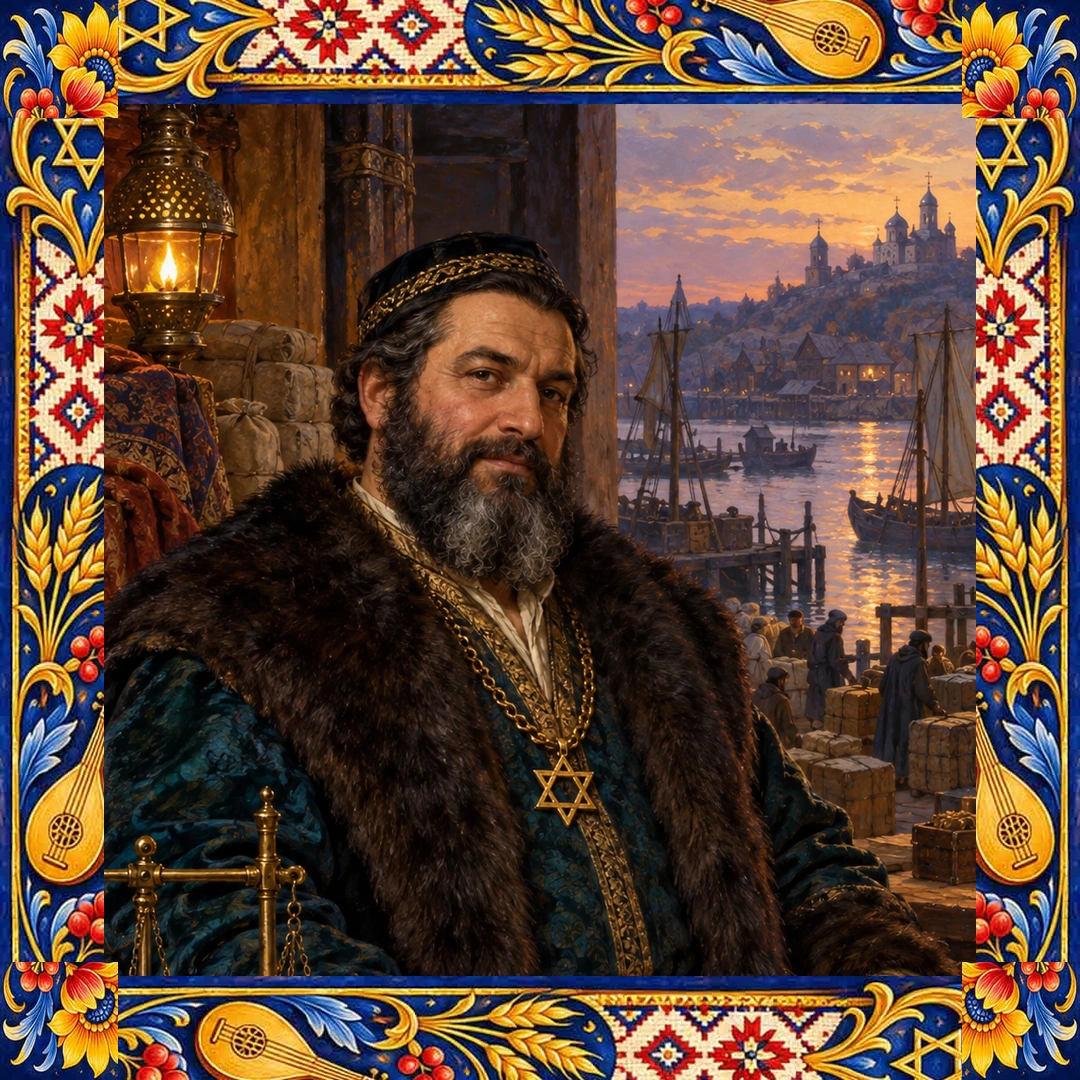
Kirill's father. Merchant. Parnas.
"A song cannot stop an arrow."
IN THE STORY
The roads are failing. He sends his son toward the gates.
Baruch is Kirill's father, the merchant whose decision begins his son's journey. Merchants are being attacked on the roads into Kyiv. Trade is in danger, and the people who depend on it need protection.
Baruch sends Kirill to train with the warriors. His son dreams of music and poetry. His father wants him to survive.
That is the whole story in one decision: A father who would rather have his son angry at him and alive, than proud of him and dead.
THE FATHER BEHIND THE DECISION
He loves his son. He is afraid for him.
Baruch is practical because he has people to look after. He knows what a lost shipment costs, what an empty road means and how quickly a secure life can become a dangerous one.
Sending Kirill away is an act of love that his son may not recognize as love. Baruch is trying to give him something the family cannot simply buy: the ability to defend himself.
He does not send him because he does not believe in his music. He sends him because he knows music alone will not keep him alive on a road where men are being robbed and killed. First, learn to survive. Then, sing.
Kirill does not understand that yet. He hears rejection. Baruch means protection.
HIS PLACE IN THE WORLD
A merchant's reach. A community's responsibility.
Baruch is the parnas, the head of the Jewish community at Kozare. His business connects Kyiv to distant markets. His responsibilities keep him close to home. He has wealth and influence, but he is not a king.
When the roads fail, he feels the danger as a merchant, a community leader and a father — all three at once.
He is the man other men come to when they need a loan, a decision, a letter written, a dispute settled, a family fed. He carries the community the way he carries his family: quietly, without asking for thanks, and without ever putting the burden down.
THE HISTORY BEHIND HIM
The Jews of Kyiv were already there.
Baruch stands in a real history many people do not know existed. Jewish merchants and families lived in medieval Kyiv, a crossroads of trade along the Dnieper. Kozare, near the river, is thought to have been one place they settled. The Hebrew appeal known as the Kievan Letter, widely associated with Kyiv, tells of a man imprisoned for debt and a community asking other Jewish communities to help him. Recent research points to a Slavic setting for the people behind the letter.
That is the Kievan Letter. That is Baruch's world.