The character chronicle
Domovoy
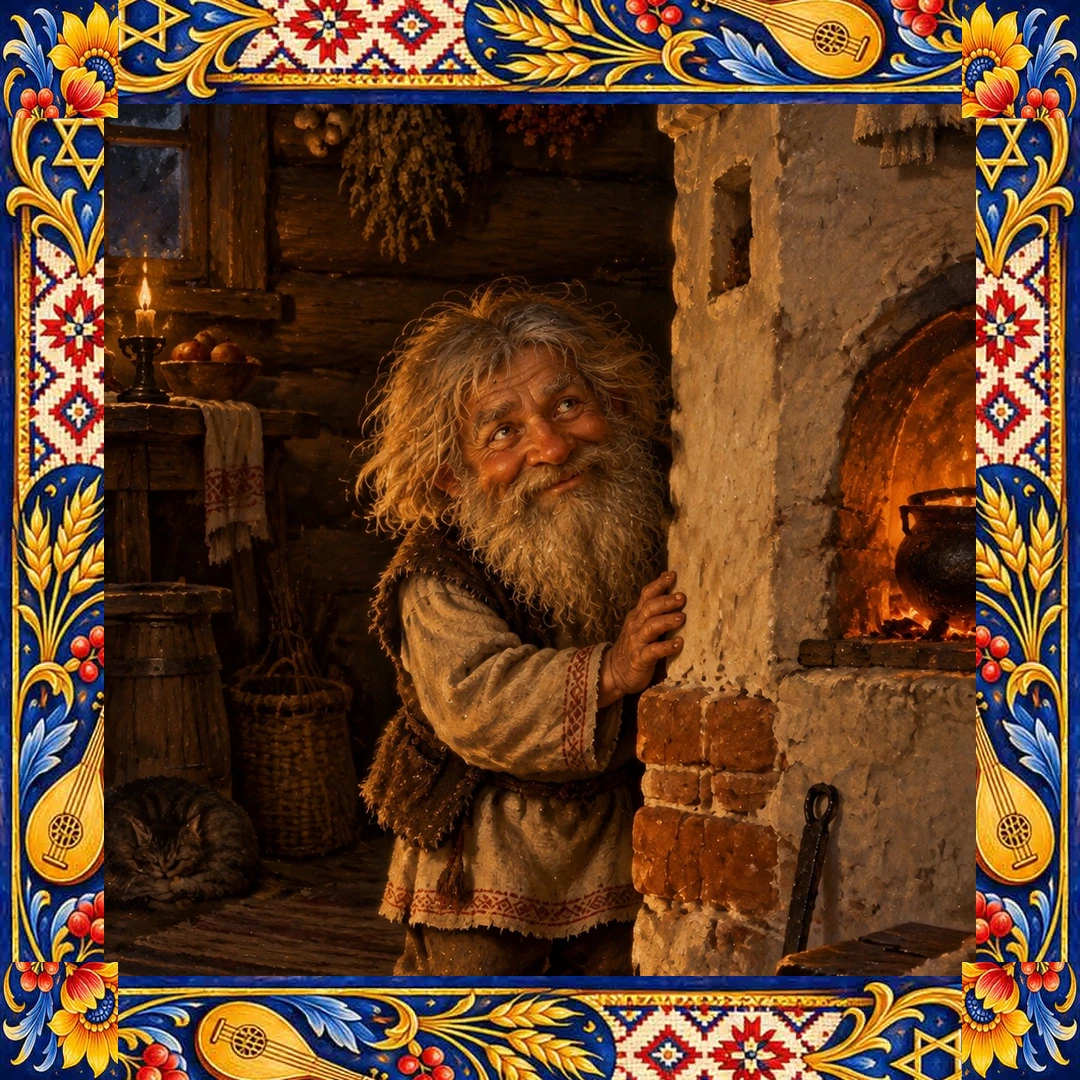
The spirit by the hearth.
"In this house, if you don't feed Domovoy, dough doesn't rise. Just saying."
IN THE STORY
Masha runs the kitchen. He has notes.
Masha welcomes you inside the gates. Domovoy wants to know what makes her pelmeni Kyiv. She makes the food. He supplies the running commentary, from his place beside the oven.
They have the rhythm of people who know each other too well. He makes a claim. She gives him a look. Neither needs to explain the arrangement.
She is Johnny Carson. He is Ed McMahon. She is the show. He is the laugh.
THE MAN BEHIND THE MURMURING
Small enough to overlook. Too opinionated to ignore.
Domovoy is not a king, a knight or a visiting guest. He is part of the household. A little folklore man beside a very real fire, watching the work and expecting his share.
When he says the dough will not rise unless he is fed, is that a warning, a household rule or a way to get lunch? Masha has heard this before.
The answer is: Yes. All three. And he knows it.
THE FOLKLORE BEHIND HIM
A home has a keeper of its own.
In Slavic folklore, the domovoy is a household spirit, often imagined as a small, hairy or bearded man living near the stove or hearth. He watches the people and animals of the household. Families leave him food in return for his care, and neglect can sour the relationship.
Golden Gates brings that bargain into Masha's kitchen: warm food, a place by the fire, and a keeper who is quite sure his contribution deserves recognition.
THE SECRET HE CARRIES
He has seen every family that ever lived in this house.
Domovoy was here before Masha. He was here before the bakery. He was here before the gates were even finished.
He has watched babies be born in this kitchen, weddings be celebrated in this kitchen, funerals be mourned in this kitchen. He knows which floorboard creaks, which pot always burns, which family always forgets to feed him.
He does not tell Masha this. He just sits in his niche and watches. Because a house does not need a keeper who talks. It needs a keeper who remembers.
And when he does talk, it is usually to ask for lunch. Or to roast Alyosha. Or to tell Masha she is doing it wrong, in the most loving way possible.
HIS WORLD
The kitchen has its own court.
Masha works. Charka waits beside her. Domovoy watches from his niche. When Alyosha arrives hoping he has not missed the food, there is another pair of eyes on the exchange.
Masha and Domovoy are kitchen partners, with the dry banter of familiar co-hosts. The shy look and the saved pelmeni belong to Masha and Alyosha. Domovoy is there to notice.
He is the audience in the scene. He says what the audience is thinking: "She likes him." "He is hungry again." "You forgot the salt." "Feed me."
WHY HE MATTERS
A home is more than its walls.
The city has guards at the gates. The household has someone by the stove. Domovoy makes the supernatural feel domestic: not always a monster in the woods, sometimes a small man who wants to know whether you remembered to feed him.
He belongs to the daily life the heroes are trying to protect. And he intends to have opinions about how it is run.
RELATED CHARACTERS
Masha · Charka · Alyosha · Baba Yaga · Leshy