The character chronicle
Esther
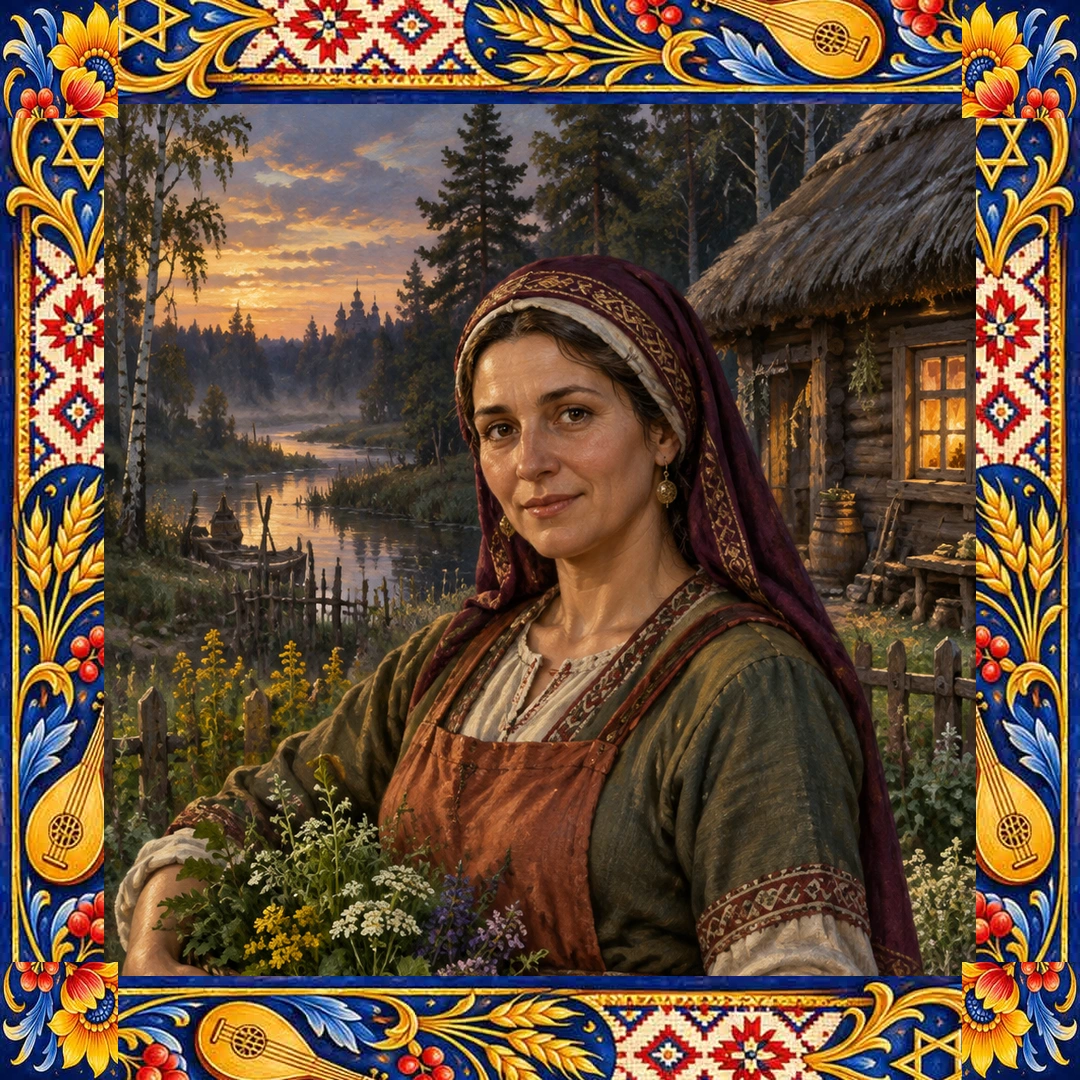
Kirill's mother. Healer of Polesye.
"Some knowledge is carried in the hands."
IN THE STORY
Before the road, there is the home he leaves.
Esther is Kirill's mother and Baruch's wife. When Baruch sends their son to train with the warriors, she sees the danger from another side: the boy who leaves is still her child.
Behind the adventure is a family that has to let him go.
Baruch decides with his head. Esther decides with her heart and her hands. She knows what it costs to send a child out into a dangerous world. She knows it because she is the one who has kept him alive since the day he was born — the fevers, the falls, the nights he cried, the food she made with her own hands to bring him back to strength.
She lets him go anyway. Because that is what a mother does. She prepares him, she blesses him, she packs his bag, and she watches the road long after he is gone.
THE WOMAN BEHIND THE HEALER
Practical hands. A strong heart.
Esther comes from the Uzh River country of Polesye. Her knowledge of herbs and healing passes through the women of her family, mother to daughter. She pays attention, remembers what she has been taught and gets on with the work of caring for people.
In a house worried about what tomorrow may bring, she knows what needs doing today.
She does not heal with speeches. She heals with her hands. A tea brewed just right. A poultice laid just so. A hand on a forehead in the middle of the night to see if the fever has broken. The knowledge is not in a book. It is in her fingers, in her memory, in the way her mother taught her and her grandmother taught her mother.
That is what "some knowledge is carried in the hands" means. You cannot learn it by reading. You learn it by watching, by doing, by caring for people until your hands know what to do before your mind does.
HER WORLD
The forest has a place at the family table.
Baruch's world follows the trade roads. Esther's reaches back to the villages, woods and riverbanks of Polesye. She carries that inheritance into their home: Jewish family life, forest knowledge and ties that reach beyond the city.
Kirill comes from both worlds, even before his journey begins.
From his father, he gets the city, the trade, the ledgers, the law. From his mother, he gets the forest, the herbs, the songs, the knowledge that there are things in this world that cannot be bought or counted — only tended, and listened to, and respected.
Her kitchen smells like both: bread from the city oven, and herbs from the Polesye forest drying above the stove. That is the house Kirill comes from. That is why he can talk to a prince and to a witch in the same day and not think it strange. His mother taught him that both worlds are real.
WHAT SHE CARRIES
The strength no one applauds.
Baruch gets to make the decision. Esther has to live with it.
She is the one who will wait. Who will keep the house running while her son is gone. Who will pray, and cook, and heal the neighbors, and hold the family together while she does not know if her child is safe.
That is a different kind of bravery. Not the bravery of the battlefield. The bravery of the home. Of staying. Of keeping the light on.
She knows Baba Yaga. Not as a story to frighten children, but as a woman of the forest who knows what Esther knows — that the forest gives and the forest takes, and you must approach it with respect. When others in Kyiv whisper about witches, Esther understands: there are women who carry knowledge the city has forgotten. She is one of them.
RELATED CHARACTERS
Kirill · Baruch · Avigail
WHY SHE MATTERS
Because every knight was once a child who was held, fed, and healed by his mother.
Kirill can be brave out in the world because he was once safe in her arms. He can face the forest because his mother taught him the forest is not only danger — it is also medicine, and food, and home.
When he is hurt, he will think of her hands. When he is lost, he will think of her voice. When he is afraid, he will remember that she let him go because she believed he would come back.
She is the heart of the house. And the heart is why we fight.